The race to build AI infrastructure is no longer affecting only demand for land, power, equipment and construction capacity. It is also reshaping global air freight.
Semiconductors, processors, server racks and other high-value components are increasingly being transported by air from manufacturing hubs in Asia to data center projects in North America and Europe. For companies competing to bring new computing capacity online, the premium paid for air freight can be small compared with the cost of missing an installation or commissioning milestone.
However, faster transportation does not automatically create a faster construction project.
Without coordination between suppliers, logistics providers, customs teams, warehouses, contractors and installation teams, equipment can travel across the world in days and still arrive before the project is ready to receive it.
For construction leaders, the question is therefore not simply whether air freight is too expensive. The more important question is whether it can protect a milestone that is worth more than the additional transportation cost.
AI infrastructure is changing the air freight market
Recent air cargo figures illustrate the scale of the development.
The International Air Transport Association reported that global air cargo demand increased by 6% year on year in May 2026. At the same time, air freight volumes between Asia and North America increased by almost 20%, according to IATA data cited by The Wall Street Journal.
This growth is taking place during a period in which the air cargo market is changing structurally. Low-value e-commerce shipments, which previously contributed significantly to market growth, are being supplemented and partly replaced by semiconductors, processors, server racks and other equipment connected to AI and cloud infrastructure.
Reuters reported that AI-related goods represented only around 7% of air freight volume in 2025 but accounted for 53.5% of its value. The imbalance demonstrates why these products are so relevant to air cargo: they are often compact relative to their financial value and can be extremely time-sensitive.
Airlines and logistics providers are already responding. Korean Air reported a 46% increase in cargo revenue, supported by demand for AI-related shipments. Airlines in Taiwan, Japan and South Korea are also adapting cargo networks around semiconductor and technology flows.
This demand is affecting pricing as well as capacity. The average spot rate from Asia Pacific to North America increased by 36% year on year in June 2026, according to Xeneta data cited by The Wall Street Journal. Rates from Taiwan to the United States reached approximately $7.02 per kilogram in May, 24% higher than one year earlier.
These figures do not mean that data center construction is the only factor influencing air freight rates. Fuel prices, geopolitical disruption, available aircraft capacity and changing trade policies all play a role. But the demand generated by AI infrastructure has clearly become an important new driver.
Why data center equipment is moving by air
Most construction materials are not suitable for air freight. Large transformers, generators, cooling systems, structural materials and other oversized equipment will usually continue to move through ocean freight, project cargo and specialized road transportation.
Air freight becomes relevant when a component combines several characteristics.
It may have a high value relative to its size. It may be available from only a limited number of manufacturers. It may be required for a specific installation sequence. Or its late arrival may delay testing, commissioning or the release of computing capacity.
Typical examples include:
- Semiconductors, processors and GPUs
- Critical network and connectivity equipment
- Memory and storage components
- Power electronics and control systems
- Preconfigured server racks
- Replacement units for damaged or defective equipment
- Components required to complete testing or commissioning
The business case is strongest when the absence of a relatively small component prevents a much larger system from being installed, tested or energized.
This is where the economics of air freight differ from a traditional comparison between transportation modes. Comparing the air freight rate with the ocean freight rate provides only part of the answer.
Construction leaders should also consider the cost of waiting.
That cost can include idle installation teams, resequencing activities, extended equipment rental, additional site management, repeated handling, emergency sourcing and delayed commissioning. For data center operators, a delay may ultimately postpone the moment at which new capacity becomes operational.
Against those costs, an air freight premium can become commercially rational.
Air freight does not solve poor project coordination
The speed of air freight can create a false sense of security.
A shipment may reach the destination airport within one or two days, but that does not guarantee that the equipment will be available for installation shortly afterwards. Customs documentation, airport handling, security procedures, onward transportation, warehousing and site access can all introduce delays.
The same applies at the project level.
Equipment that arrives earlier than expected may encounter a warehouse without available space, incomplete site access documentation or an installation area that has not yet been released. It may have to be stored, moved and handled several times before it reaches its final location.
In other cases, only part of a system is accelerated. The main equipment may arrive by air, while cables, mounting materials, control units or related components remain in a delayed ocean shipment. The project has paid for speed but cannot use the equipment.
This distinction is important:
Transportation speed is not the same as installation readiness.
Air freight delivers value only when the complete flow is synchronized. That includes supplier readiness, transportation, customs, warehousing, site delivery and installation.
Without that coordination, air freight risks becoming an expensive response to a planning problem rather than a genuine schedule-protection strategy.
Bulky equipment creates a different air freight challenge
The transition from e-commerce parcels to data center equipment also creates operational challenges for airlines and logistics providers.
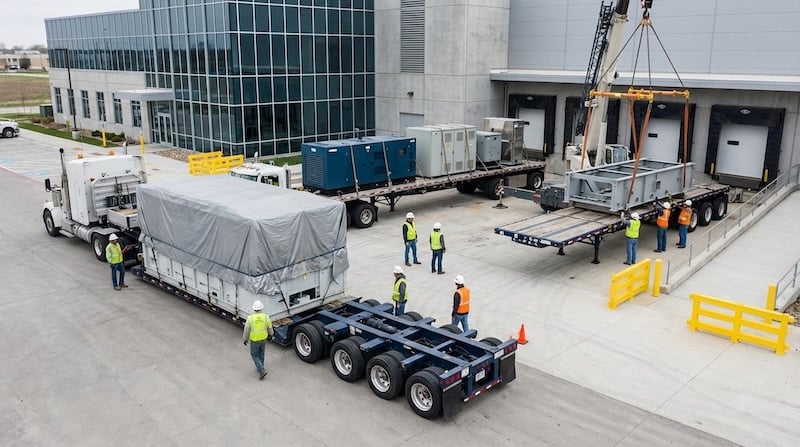
Semiconductors may be compact, but preconfigured server racks and related hardware can be large, heavy and sensitive. They cannot always be transported in the cargo hold of a passenger aircraft. Instead, they may require dedicated freighter capacity, specialist loading equipment, controlled handling and vehicles designed to minimize shock and vibration.
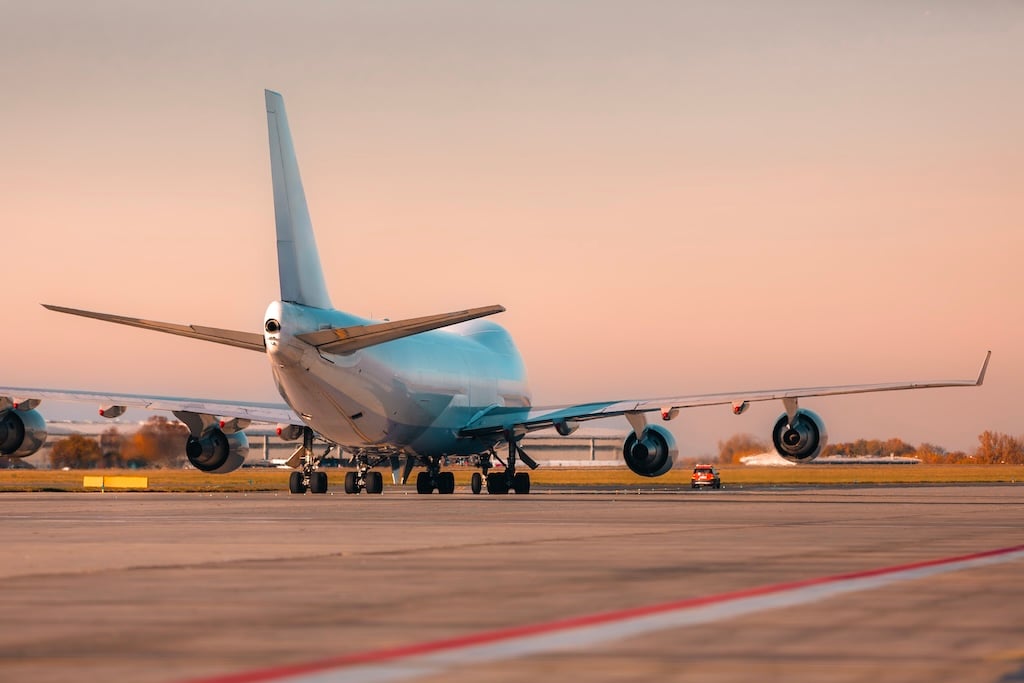
Dedicated freighter aircraft are less widely available than passenger aircraft. Continued growth in demand for large data center shipments could therefore create additional pressure on the most suitable capacity.
The logistics requirements also continue after the aircraft lands.
Server and data center equipment may require secure warehousing, inspection, configuration, testing, uncrating, white-glove handling and delivery to an exact position inside the facility. Kuehne+Nagel describes data center logistics as a specialized operation in which equipment can be transported in air-ride vehicles, unpacked, configured and positioned directly inside the data center.
This means that the best flight option is not necessarily the best end-to-end logistics option. Construction teams must consider the complete journey from the supplier to the final installation position.
Logistics capacity is being built around data center growth
Large logistics providers are making substantial investments to support the growth of hyperscale and AI infrastructure.
DHL announced that it is adding ten dedicated data center logistics facilities in North America, representing more than seven million square feet of warehousing capacity. The facilities are intended to support activities such as specialist handling, rack preconfiguration and the secure movement of high-value IT equipment.
DHL has also expanded its data center logistics footprint across Asia Pacific, supporting more than 160,000 square meters of specialized infrastructure in key markets.
These investments suggest that data center logistics is becoming a dedicated supply chain category rather than simply another variation of general freight forwarding.
For construction leaders, this creates both opportunities and risks.
More specialized capacity can improve handling, security and scalability. At the same time, growing demand means that suitable warehouse space, freighter capacity, specialist carriers and trained teams may not always be available at short notice.
Capacity therefore needs to be secured as part of the project plan, not only after a delay has already occurred.
Five questions before choosing air freight
Air freight decisions should be connected to the construction schedule and supported by a clear escalation framework.
Before upgrading a shipment from ocean to air, construction and supply chain teams should answer five questions.
1. Which milestone does the shipment protect?
The shipment should be linked to a specific installation, testing, energization or commissioning milestone.
Without that connection, it becomes difficult to determine whether the additional cost produces meaningful project value.
2. What is the real financial impact of a delay?
The calculation should include more than transportation costs.
Teams should consider idle labor, schedule resequencing, additional site overhead, equipment rental, storage, repeated handling and the commercial impact of capacity becoming available later than planned.
3. Is the equipment genuinely ready to ship?
Air freight cannot compensate for incomplete engineering decisions or supplier documentation.
Configuration, quality approvals, export documents, packaging, dimensions, customs classifications and delivery instructions should all be confirmed before capacity is booked.
4. Is the destination ready to receive the equipment?
Warehouse capacity, customs clearance, onward transportation, site access, unloading equipment and installation resources should be confirmed before departure.
Otherwise, faster transportation may only move the waiting time from the supplier to the destination.
5. Are all related components available?
Teams must consider the complete installation package.
Accelerating one component adds little value when cables, brackets, control units, tools or supporting equipment remain unavailable. Shipment decisions should therefore be made at system or installation-package level rather than at individual purchase-order level.
From emergency expediting to planned escalation
Many projects use air freight reactively. A delay becomes visible, pressure increases and the fastest available transport option is selected.
That approach may protect an immediate deadline, but it can also hide the underlying cause of the disruption. If late engineering, fragmented information or delayed decision-making remains unresolved, emergency air freight becomes a recurring project cost.
A more mature approach identifies air freight scenarios during the planning phase.
Project teams can determine which equipment has the greatest critical-path exposure, which suppliers and origin locations create the greatest lead-time risk and which milestones justify transport escalation.
They can also define:
- When escalation from ocean to air should be considered
- Who is authorized to approve the additional cost
- Which data is required to support the decision
- How customs and destination handling will be organized
- How emissions and budget impacts will be reported
- Which fallback routes or airports are available
- How the shipment will be coordinated with installation readiness
This turns air freight from an emergency response into a controlled schedule-protection mechanism.
Visibility alone is not enough
Data center projects typically involve manufacturers, freight forwarders, carriers, customs agents, warehouse operators, general contractors, specialist installers and multiple internal project teams.
Each organization may have access to part of the information, but no single party automatically sees the complete relationship between material status and the construction schedule.
A shipment can appear on time from a logistics perspective while still being late from a construction perspective. It may arrive before its installation area is available, after the relevant labor has been rescheduled or without another component required to complete the system.
Construction leaders therefore need more than shipment tracking.
They need to understand:
- Which materials support upcoming milestones
- Which components are at risk
- Which delays will affect installation
- Which exceptions require intervention
- Whether an expedited shipment will actually recover project time
- Whether the site is ready to receive and install the equipment
This requires connected supplier, logistics and project data.
The objective is not simply to see where a shipment is located. The objective is to understand what its status means for the project and which action should follow.
Air freight should protect the critical path, not replace planning
The growing relationship between air freight and data center construction reflects the urgency of the AI infrastructure market.
Companies are willing to pay more to bring critical equipment to projects faster. In the right circumstances, that decision can protect installation schedules, commissioning milestones and the commercial value of new capacity.
But air freight is not automatically the fastest route to installation readiness.
Its value depends on the decisions made before the aircraft departs and the coordination that happens after it lands. The supplier must be ready, the documentation must be complete, the destination must be prepared and every related component must be aligned with the installation sequence.
For construction leaders, the objective should therefore not be to maximize the use of air freight. It should be to use it selectively, based on critical-path exposure and the total cost of delay.
Air freight can protect an important milestone.
Only an orchestrated construction supply chain can protect the complete project timeline.
Sources
- International Air Transport Association, Air Cargo Demand Up 6.0% in May, June 2026.
- Reuters, AI race redraws Asian air cargo, replacing e-commerce as growth engine, July 2026.
- The Wall Street Journal, Data-Center Construction Boom Lifts Airfreight Demand, July 2026.
- Xeneta, What the Air Freight Market Looks Like Right Now and Where It’s Heading, June 2026.
- DHL Group, DHL expands its North America logistics infrastructure amid growing global demand for data center logistics services, March 2026.
- DHL Group, DHL expands Asia Pacific data center logistics capabilities, June 2026.
- Kuehne+Nagel, The Physical Foundation of the Digital Cloud, Annual Report 2025.