

Climate-related disasters create a difficult double challenge for humanitarian organisations. They increase the need for shelter, food, clean water and medical supplies, while the same event can damage the roads, energy systems and communications needed to deliver them.
The World Meteorological Organization reports that dangerous heat, floods and drought affected millions across Asia in 2025, while glaciers in High Mountain Asia continued to retreat. It also emphasises that early warnings and coordinated action can reduce the impact of disasters. WMO State of the Climate in Asia 2025.
The human consequences come first. Every delayed delivery can affect people who already face loss and insecurity. Preparing humanitarian supply chains for a changing climate therefore means identifying what could fail, protecting access to essential supplies and helping response teams use limited resources carefully.
What the 2026 Nepal disaster reveals about cascading risk
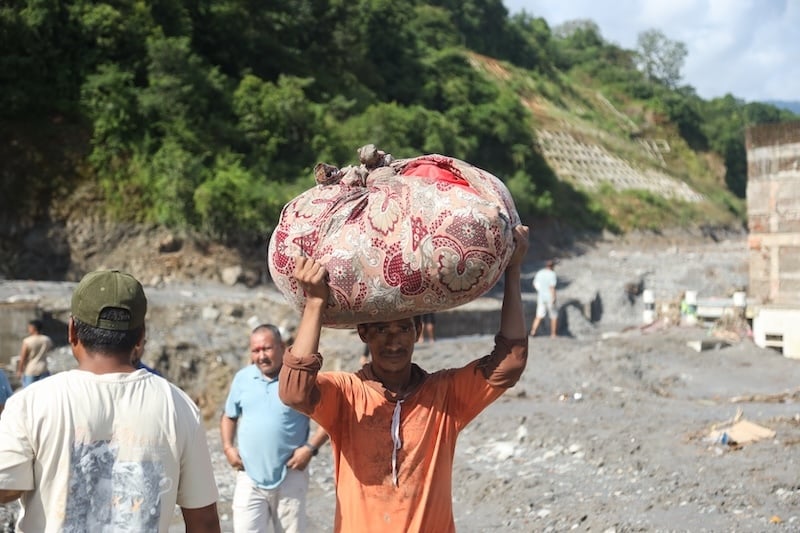
On 26 August 2026, a major collapse involving rock and glacier ice near the Nepal-Tibet border developed into a destructive flow of debris and water. The disaster affected communities and infrastructure downstream and led the Government of Nepal to establish emergency coordination and publish continuing situation updates. Government of Nepal flood updates.
A rapid scientific analysis concluded that human-caused warming likely contributed to the conditions that destabilised the mountain slope. Rising temperatures have thinned glaciers and thawed ice and permafrost that can help hold high mountain slopes together. The researchers also stressed that climate change was not the sole cause. Geological conditions and the effects of the 2015 earthquake may also have contributed. Reuters climate attribution report.
The lesson for humanitarian logistics is broader than this single event. A hazard beginning in a remote mountain area can rapidly become a downstream crisis affecting settlements, roads, power generation, communications and cross-border access. Several parts of a response network can fail at the same time, even when the initial incident occurs far from a warehouse or distribution point.
This is cascading risk: one disruption triggers several others. A plan built around one expected hazard or one alternative route may therefore provide less protection than it appears to.
Climate risk changes the assumptions behind the network
Different hazards put pressure on different parts of an operation. Flooding can cut access and damage storage. Drought can prolong demand for food and water support. Extreme heat can affect staff safety and the condition of temperature-sensitive goods. Glacier retreat and thawing permafrost can introduce risks that historical transport data may not capture.
Future humanitarian needs also depend on how effectively communities can adapt. In The Cost of Doing Nothing, the IFRC presented a scenario in which the number of people needing humanitarian assistance because of climate-related disasters could double by 2050 without urgent action. Its analysis also found that adaptation, disaster risk reduction and anticipatory action could substantially reduce those needs. IFRC The Cost of Doing Nothing.
A rise in humanitarian need should never be treated as a commercial opportunity. It is a warning that humanitarian organisations may face greater pressure while funding and operational capacity remain constrained. A logistics partner creates value by reducing avoidable cost, delay and disruption, allowing more of the available resources to support the mission.
Preparedness begins with decisions agreed in advance
Humanitarian organisations already use anticipatory action for hazards that can be forecast. The IFRC Anticipatory Pillar connects forecasts and risk analysis to pre-agreed actions and financing. Its protocols can include stock pre-positioning and annual readiness activities, with funding released when defined triggers are reached. IFRC Anticipatory Pillar of the Disaster Response Emergency Fund.
The logistics plan must translate a warning into action. It should establish who assesses the effect on transport and storage, which supplies can move, where they can be received safely and who can approve extra expenditure or a change of destination.
Some high mountain hazards remain difficult to predict precisely. Preparedness must therefore combine early warning with resilience against events that offer little notice. That means protecting critical dependencies rather than relying on a perfect forecast.
Protect access and programme continuity
Alternative routes should be assessed for shared points of failure. Two carriers using the same bridge, border crossing or valley road do not provide true redundancy. Two warehouses may also be exposed to the same floodplain, power network or communications outage.
In humanitarian operations, these risks can change a transport plan at short notice. Our team has coordinated aid movements into hard-to-reach locations where seasonal weather, road conditions, border procedures and security constraints all affect access. A workable alternative requires more than another carrier: teams need to know which routes are viable, which local partners can support them and what documentation a change of route requires.
The consequences are especially serious for medical and temperature-sensitive supplies. A delay may affect the condition of the cargo and postpone essential aid for people waiting to receive it. Visibility across the operation helps teams understand those consequences and decide quickly what to do next.
Stock location involves a real trade-off. Holding supplies closer to communities can shorten response times but may expose the inventory to local hazards, damage or expiry. Central storage can simplify stock management while increasing dependence on a small number of transport corridors. The right choice depends on the hazard, product requirements and local capacity.
Multi-country operations require the same analysis across the full network. Rerouting through another entry point can change customs documentation, storage requirements, transport capacity and the timing of local deliveries. These consequences need to be assessed together.
Ongoing programmes also need protection. If an emergency response draws vehicles, warehouse space or inventory away from scheduled replenishment, teams need agreed priorities and a recovery plan. Communities should not lose reliable support because the organisation is responding elsewhere.
Prepare the mission for operational disruption
A changing situation requires one shared operational picture. Procurement teams need to know which orders remain useful. Transport providers need current access information. Warehouses need reliable inbound plans, and local teams need credible arrival estimates so they can organise receipt and distribution.
Preparedness means agreeing how the operation will respond before a disruption occurs. When a route, facility or border crossing becomes unavailable, teams need to identify the affected supplies, assess alternatives, assign the next decision and update everyone whose work depends on the original plan.
This coordinated approach cannot remove the hazard, but it can reduce exposure, limit the operational impact and help the response adapt while continuing to serve affected communities.
Technology can make dependencies and exceptions visible, but reliable information and clear responsibilities remain essential. Local knowledge should guide access and delivery decisions, with humanitarian organisations and local partners retaining control of assistance priorities.
Caliber helps organisations build this preparedness into complex logistics operations. We coordinate activities across origins, destinations and providers, identify vulnerabilities and help protect the continuity of emergency responses and ongoing programmes.
A practical starting point is to test one critical supply route. Identify what happens if it becomes unavailable, which other activities would be affected, how long existing stock would last and who can activate an alternative. This turns climate risk into decisions that can be addressed before the next disruption.
If you are reviewing the preparedness of an aid and relief supply chain, Caliber can help identify vulnerabilities and strengthen the coordination behind the mission.