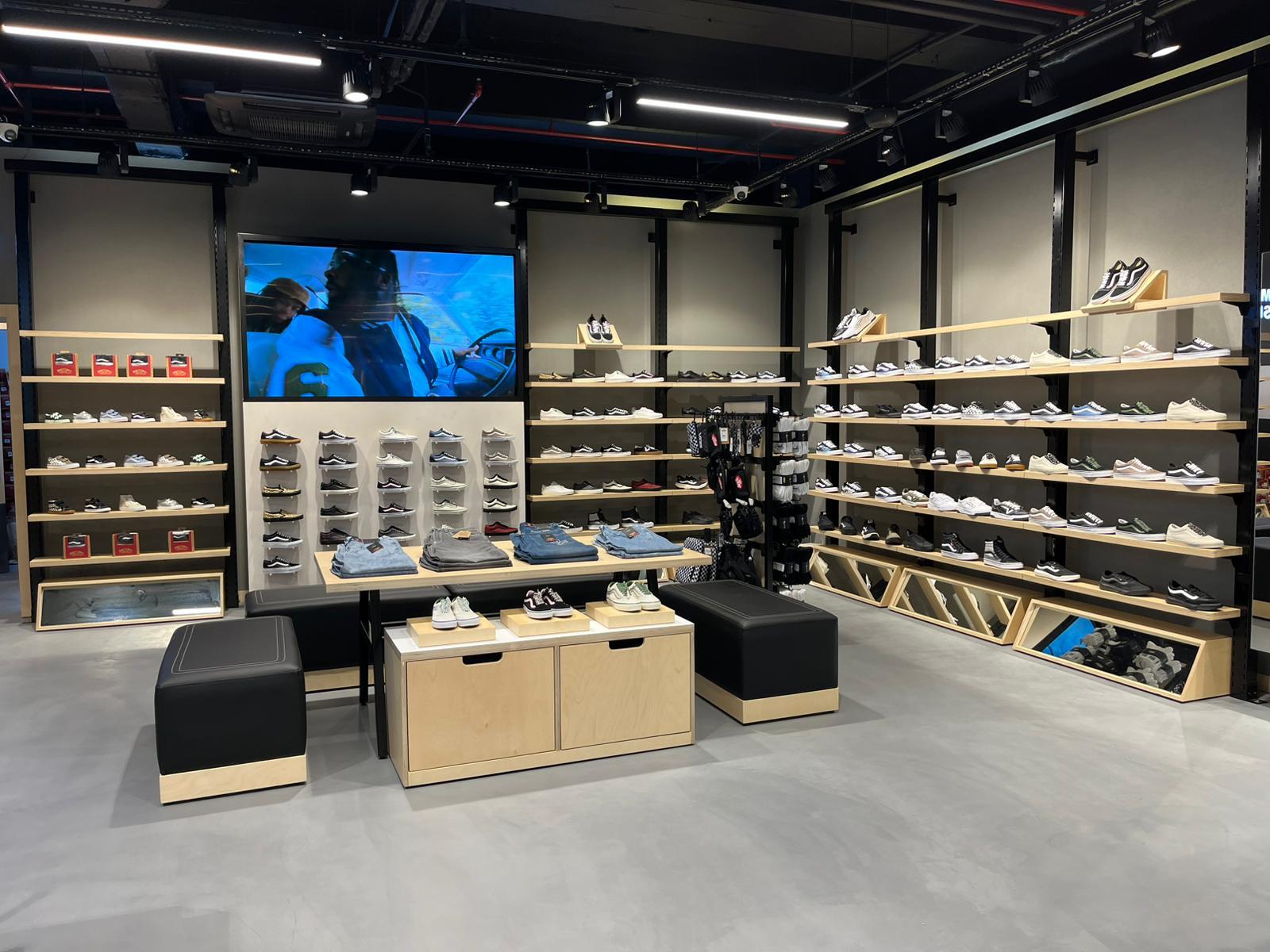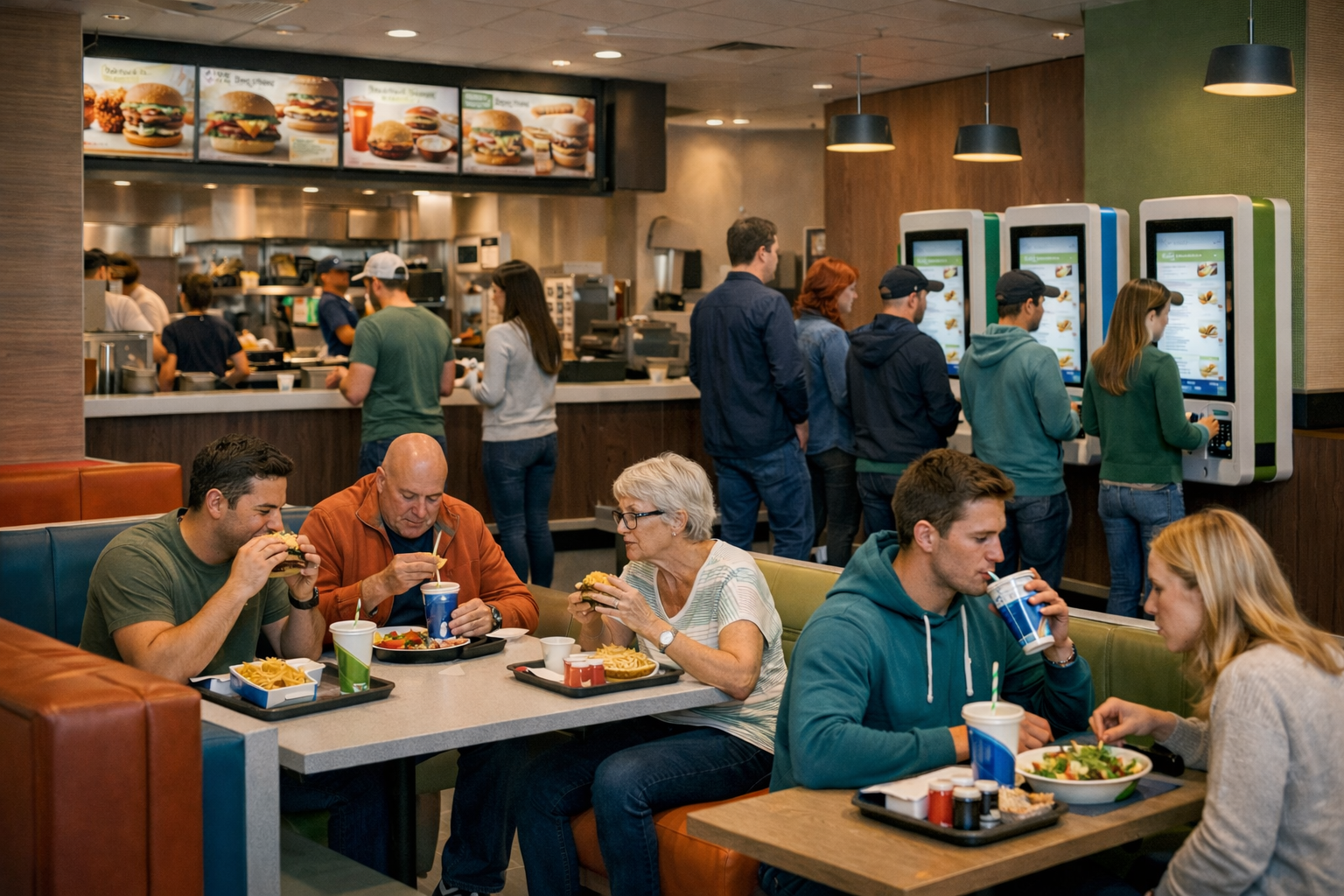
Quick Service Restaurants (QSR) are built on speed, repetition and predictability. Concepts are standardized, store designs are replicated, and opening dates are often locked months in advance. Yet when QSR rollouts miss their deadlines, the root cause is rarely structural construction.
More often, the real bottleneck sits in a category that is underestimated, fragmented and managed as an afterthought: FF&E.
Furniture, Fixtures and Equipment are typically treated as “non-structural” construction items. In reality, FF&E behaves nothing like traditional construction materials. And as long as QSR organizations manage it that way, store openings remain exposed to unnecessary delays and risk.
FF&E in QSR is not a definition problem — it is an execution problem
In construction terminology, FF&E refers to Furniture, Fixtures and Equipment: the non-structural elements that make a building usable. That definition is widely accepted across the industry.
In QSR rollouts, however, FF&E plays a fundamentally different role.
Here, FF&E is not a checklist item or a procurement category. It represents the operational backbone of the store. Without installed kitchen equipment, counters, fixtures and branded elements, a location cannot train staff, test workflows or open its doors.
This distinction matters. Because while the meaning of FF&E may be clear, the logistics, sequencing and coordination required to deliver FF&E on time are anything but. And that is where many QSR rollouts quietly start to fail.
Why FF&E behaves differently from construction materials
One of the most common mistakes in QSR expansion is assuming FF&E can be planned, sourced and delivered in the same way as concrete, steel or drywall. It cannot.
FF&E introduces a very different set of supply chain dynamics.
Multi-vendor complexity
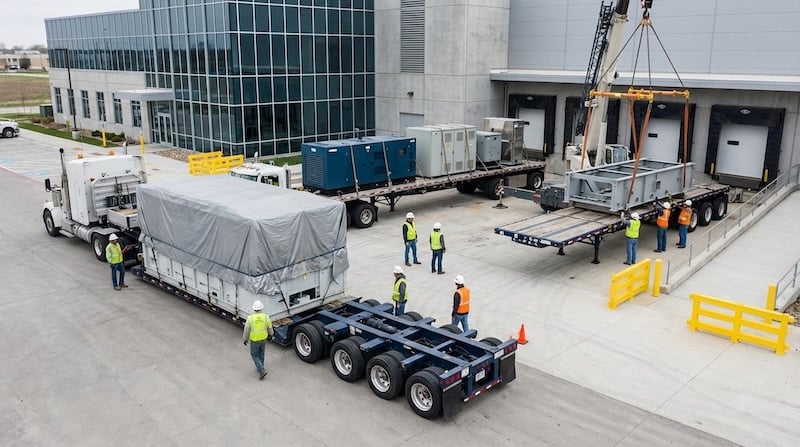
A single QSR store often depends on dozens of FF&E suppliers, frequently spread across multiple regions. Unlike construction trades, there is rarely one contractor coordinating the full flow.
Volatile lead times
FF&E items are often customized, batch-produced or globally sourced. Lead times fluctuate, partial shipments are common, and last-minute changes are difficult to absorb.
Strict sequencing dependencies
In QSR environments, installation order is critical. Kitchen lines, counters, fixtures, signage and seating must arrive in the right sequence. A single missing component can block multiple downstream activities.
Limited on-site flexibility
Most QSR locations have minimal storage capacity. Early deliveries create congestion, while late deliveries stop progress entirely.
Together, these characteristics place FF&E firmly in the category of high-risk supply chain flows, not standard construction logistics.
The hidden risk: managing FF&E in silos
Despite this complexity, FF&E is often managed through disconnected spreadsheets, email chains and supplier-specific updates. Procurement focuses on sourcing. Construction focuses on site readiness. Operations focuses on opening day.
Each function sees only part of the picture.
The result is familiar across QSR rollouts:
- deliveries arrive incomplete or out of sequence
- installers wait for missing items
- opening dates slip without a clear root cause
- expediting costs escalate late in the project
These outcomes are rarely caused by poor planning. They are caused by a lack of supply chain collaboration.
Why supply chain collaboration is critical for FF&E in QSR
FF&E does not fail because suppliers do not ship. It fails because dependencies across suppliers, logistics partners and internal teams are invisible.
This is why the importance of supply chain collaboration becomes tangible in FF&E execution.
Successful QSR rollouts require alignment across:
- procurement and sourcing teams
- multiple FF&E suppliers
- logistics and transportation partners
- construction and site management
- operations and store readiness teams
Without collaboration, each party optimizes locally. With collaboration, the entire rollout optimizes toward a shared goal: Opening Day readiness.
That is the core reason why supply chain collaboration is important in QSR expansion. FF&E sits at the intersection of functions, timelines and vendors. Without a shared operating model, friction is inevitable.
Collaboration is not about updates — it is about sequencing
Many organizations believe they are collaborating because suppliers provide ETAs or logistics partners share tracking information. In practice, this often creates more noise than clarity.
Real collaboration in FF&E logistics focuses on:
- shared milestones rather than individual shipment dates
- installation readiness rather than delivery confirmation
- early exception detection rather than post-fact reporting
For QSR teams, the critical question is not “when will this item arrive?”
It is “does this arrival unblock the next step toward opening the store?”
This shift from shipment-centric thinking to sequence-centric execution is where FF&E programs either stabilize or unravel.
FF&E logistics requires a different supply chain model
Because FF&E behaves differently, it requires a different operational approach.
Leading QSR organizations no longer treat FF&E as a series of purchase orders. They manage it as:
- a coordinated rollout program
- a sequence of interdependent milestones
- a shared responsibility across internal and external partners
This approach is built on:
- one shared FF&E schedule
- aligned milestones across suppliers and logistics partners
- early visibility into risks and dependencies
- clear ownership of exceptions and resolution
In other words, FF&E requires end-to-end supply chain collaboration, not downstream firefighting.
Why this challenge intensifies as QSR scales
The impact of FF&E misalignment grows exponentially with scale.
A single delayed store is painful. Ten delayed stores are expensive. Fifty delayed stores become a strategic risk that affects revenue forecasts, brand momentum and franchise confidence.
As rollout velocity increases:
- manual coordination stops scaling
- small delays cascade across programs
- local workarounds hide systemic issues
At this point, FF&E is no longer an operational detail. It becomes a critical constraint on growth.
Rethinking FF&E: from cost category to critical path
The most mature QSR organizations have already made a fundamental shift.
They no longer ask:
- “Who is responsible for FF&E delivery?”
They ask:
- “How do we orchestrate FF&E across suppliers, logistics and sites to protect Opening Day?”
This shift reframes FF&E from a procurement exercise into a critical-path supply chain discipline.
It is also where supply chain collaboration stops being an abstract concept and becomes a practical execution capability.
Final thought: FF&E is where strategy meets reality
QSR expansion strategies live and die at store level. FF&E is the moment where global sourcing, standardized concepts and local execution collide.
Treat FF&E like construction material, and delays become normalized.
Treat it as a collaborative supply chain flow, and store openings become predictable.
That difference is not theoretical. It is operational. And for QSR organizations under pressure to scale, it is decisive.
.jpg)