.jpg?width=1600)
Global supply chains are once again being reminded that ocean freight is not just an execution cost. It is a strategic risk factor.
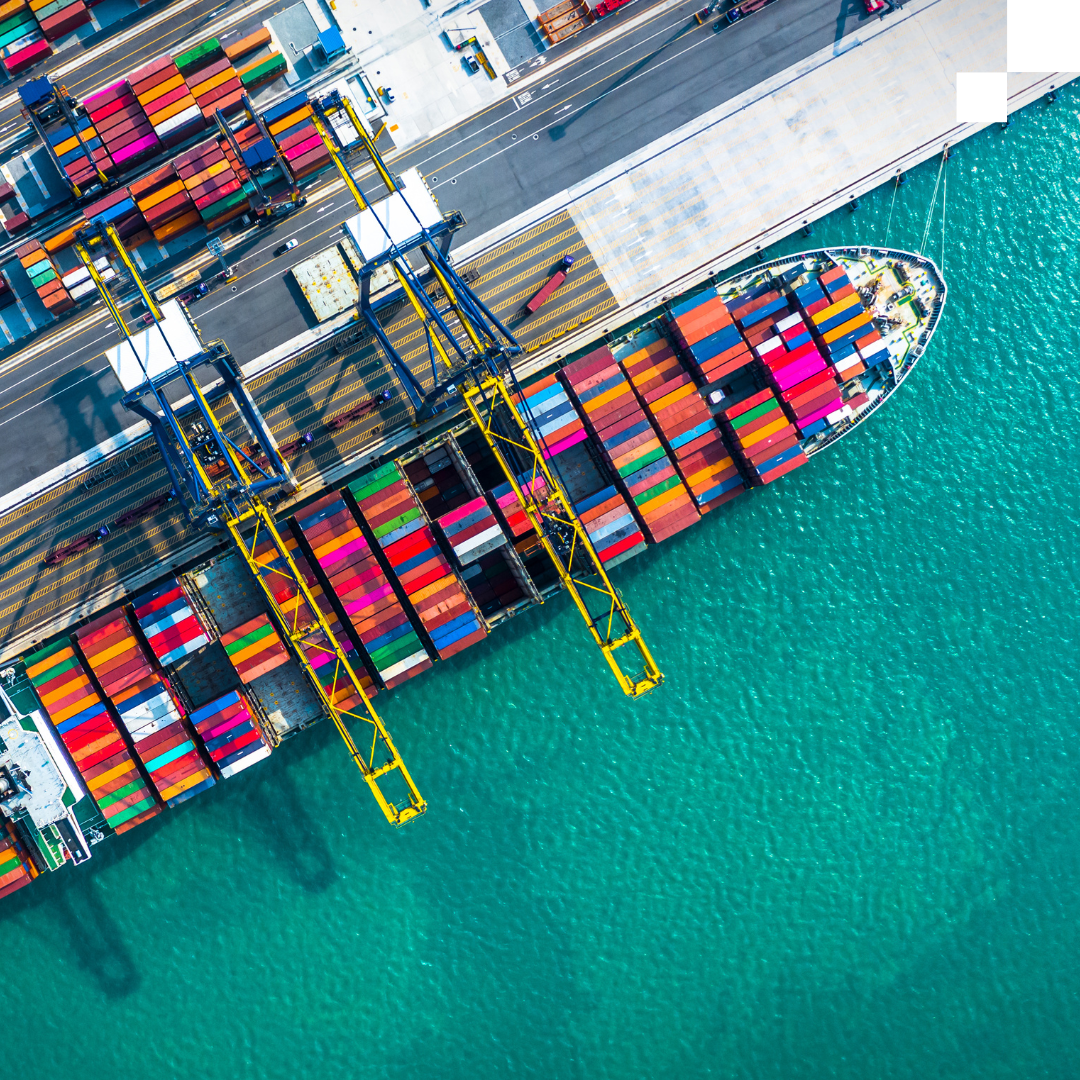
Recent freight market data shows that container shipping costs have climbed to their highest level since the Red Sea and Suez Canal disruptions of 2024. Rates from China to major destinations have increased sharply, driven by a combination of tariff uncertainty, frontloading ahead of new import duties, geopolitical disruption, fuel cost pressure and seasonal demand.
For many companies, this creates an immediate cost challenge. Transport becomes more expensive. Margins come under pressure. Procurement decisions become more complex. Inventory is moved earlier than planned. And supply chain teams are forced to make decisions in a market where the cost of moving goods can change significantly within weeks.
But the bigger lesson is not only about ocean freight rates.
It is about how supply chains are designed.
Ocean freight volatility exposes structural dependency
For years, many sourcing strategies were built around global efficiency. Companies selected suppliers based on production cost, scale, capacity and access to specialized manufacturing. Long-distance ocean freight was often treated as a manageable part of the model, especially when freight rates were relatively stable.
That assumption is becoming harder to defend.
When ocean freight costs rise sharply, companies that depend heavily on distant suppliers have fewer options. They may need to absorb higher transport costs, pass costs on to customers, increase inventory, bring shipments forward or accept longer lead times. None of these choices are ideal.
This is especially visible when importers start frontloading goods ahead of new tariffs or expected disruption. Bringing shipments forward may reduce exposure to duties in the short term, but it also creates new pressure elsewhere in the supply chain. Warehouses fill up earlier. Working capital is tied up for longer. Forecasts become more fragile. Capacity tightens. And when many companies make the same decision at the same time, freight rates can rise even further.
In other words, ocean freight volatility does not only increase costs. It exposes dependency.
The real question is not where to buy, but how much risk to carry
Traditional sourcing decisions often started with a simple question: where can we buy this at the lowest unit cost?
That question is no longer enough.
A supplier may offer the lowest purchase price, but if that supplier creates high transport exposure, tariff risk, long lead times, inventory pressure and limited flexibility, the true cost may be much higher than it appears.
Modern sourcing strategies need to look at the full risk-adjusted cost of supply. That includes product cost, transport cost, duties, inventory impact, emissions, reliability, lead time variability, expediting risk and the potential impact of delays on operations or projects.
In project-driven environments, such as construction, this is especially important. A delayed shipment does not only create a logistics issue. It can delay installation, disrupt labor planning, affect contractor productivity and push back critical milestones. In large construction projects, the cost of waiting can easily exceed the cost of transportation itself.
This is why managing long lead times in construction supply chains has become a strategic priority. Companies need to understand not only what materials cost, but also how sourcing decisions influence execution risk.
Sourcing strategy needs more optionality
The answer to ocean freight volatility is not to move every supplier closer to home. Global sourcing will remain essential for many categories, especially where scale, specialization, cost efficiency or manufacturing capacity are difficult to replicate regionally.
But companies do need more optionality.
A resilient sourcing strategy is not built around one perfect route, one supplier base or one cost model. It is built around the ability to adjust when conditions change.
That may include supplier diversification, regional sourcing alternatives, dual sourcing, better inventory positioning, stronger supplier collaboration and more flexible logistics networks. For some materials or product categories, local sourcing can play an important role. For others, regional buffers or alternative trade lanes may create more value.
The objective is not to choose between global and local.
The objective is to understand where each model creates value.
Global sourcing may still be the right choice for high-volume, specialized or cost-sensitive materials. Local or regional sourcing may be more valuable for critical items, time-sensitive materials, high-risk categories or products where speed and availability matter more than the lowest purchase price.
The companies that perform best will be those that can make these decisions based on data, not assumptions.
Inventory positioning becomes a strategic lever
When freight rates increase or tariffs are expected to change, many companies respond by moving inventory earlier. This can protect supply in the short term, but it also creates operational consequences.
More inventory requires more storage capacity. Earlier shipments require more working capital. Additional stock can create handling complexity, especially when materials need to be staged, sequenced or delivered according to project milestones.
This is where cross-dock and warehousing strategies become more important.
Inventory should not simply be moved earlier. It should be positioned intelligently. Companies need to understand which materials are critical, which items can be consolidated, which products require staging, and which flows can be delayed without creating execution risk.
In construction supply chains, this is particularly relevant. Materials often need to arrive when installation teams are ready to use them. Too late creates delays. Too early creates storage issues, damage risk and site congestion. The goal is not maximum inventory. The goal is material readiness.
Freight volatility therefore requires more than a procurement response. It requires alignment between sourcing, logistics, warehousing, project planning and site execution.
Visibility alone will not solve freight volatility
Many companies have invested in visibility tools to track shipments, monitor suppliers and report on performance. That is valuable, but visibility alone does not solve freight volatility.
Knowing that transport costs are rising does not automatically reveal which purchase orders should be accelerated. Seeing that a shipment is delayed does not automatically show which project milestones are at risk. Understanding that a supplier is exposed to tariffs does not automatically identify the best alternative.
Visibility needs to turn into decision-making.
That requires supply chain analytics and reporting that connect sourcing decisions, logistics performance, inventory availability, supplier reliability and project milestones. Companies need to see not only what is happening, but also what it means and what action should be taken.
This is where supply chain orchestration becomes critical.
A more resilient supply chain is not created by optimizing procurement, logistics or inventory in isolation. It is created by connecting these decisions across the full operating model. Sourcing teams need to understand logistics exposure. Logistics teams need to understand project priorities. Project teams need to understand supplier constraints. And leadership needs a clear view of how supply chain decisions affect cost, risk and execution.
Freight volatility is a signal, not an exception
The latest rise in ocean freight rates should not be treated as a temporary problem that will simply disappear once the market normalizes.
It is part of a broader pattern.
Tariffs can change. Trade routes can be disrupted. Capacity can tighten. Fuel prices can move. Geopolitical events can reshape cost structures. Seasonal demand can amplify pressure. And when many companies respond in the same way, the system becomes even more volatile.
This does not mean companies should abandon global supply chains. It means they need to design them differently.
The future supply chain will not be purely global or purely local. It will be intelligently balanced. Some materials will continue to move through global networks because that is where scale, specialization or cost efficiency makes sense. Other materials will be sourced regionally or locally because speed, flexibility, resilience or risk reduction matter more.
The key is knowing the difference.
From cost efficiency to strategic resilience
Ocean freight rate volatility changes the sourcing conversation.
It moves the discussion beyond purchase price. It forces companies to consider exposure, flexibility, inventory, emissions, supplier reliability and execution risk. It highlights the need for better coordination between procurement, logistics and operations. And it shows why sourcing strategy should be part of a broader supply chain resilience agenda.
For companies operating in complex, project-driven environments, the lesson is clear.
The lowest-cost supplier is not always the lowest-risk option. The shortest transport route is not always the most reliable. The best sourcing strategy is not always global or local.
The best strategy is the one that gives companies control when conditions change.
When ocean freight rates spike, sourcing strategy needs to change with them.