In many large retail organizations, performance ultimately comes down to one metric:
How many weeks is a store generating revenue within the fiscal year?
Not how efficiently it was built.
Not whether it was delivered according to plan.
But how much time it actually spends trading.
It’s a simple idea—but one that tends to shift the conversation.
Because once salesweeks per fiscal year becomes the reference point, it raises a more fundamental question:
What is really determining when a store opens?
At first glance, the answer seems straightforward: construction timelines.
But in practice, the reality is more complex.
Beyond Construction: Where Timing Is Really Decided
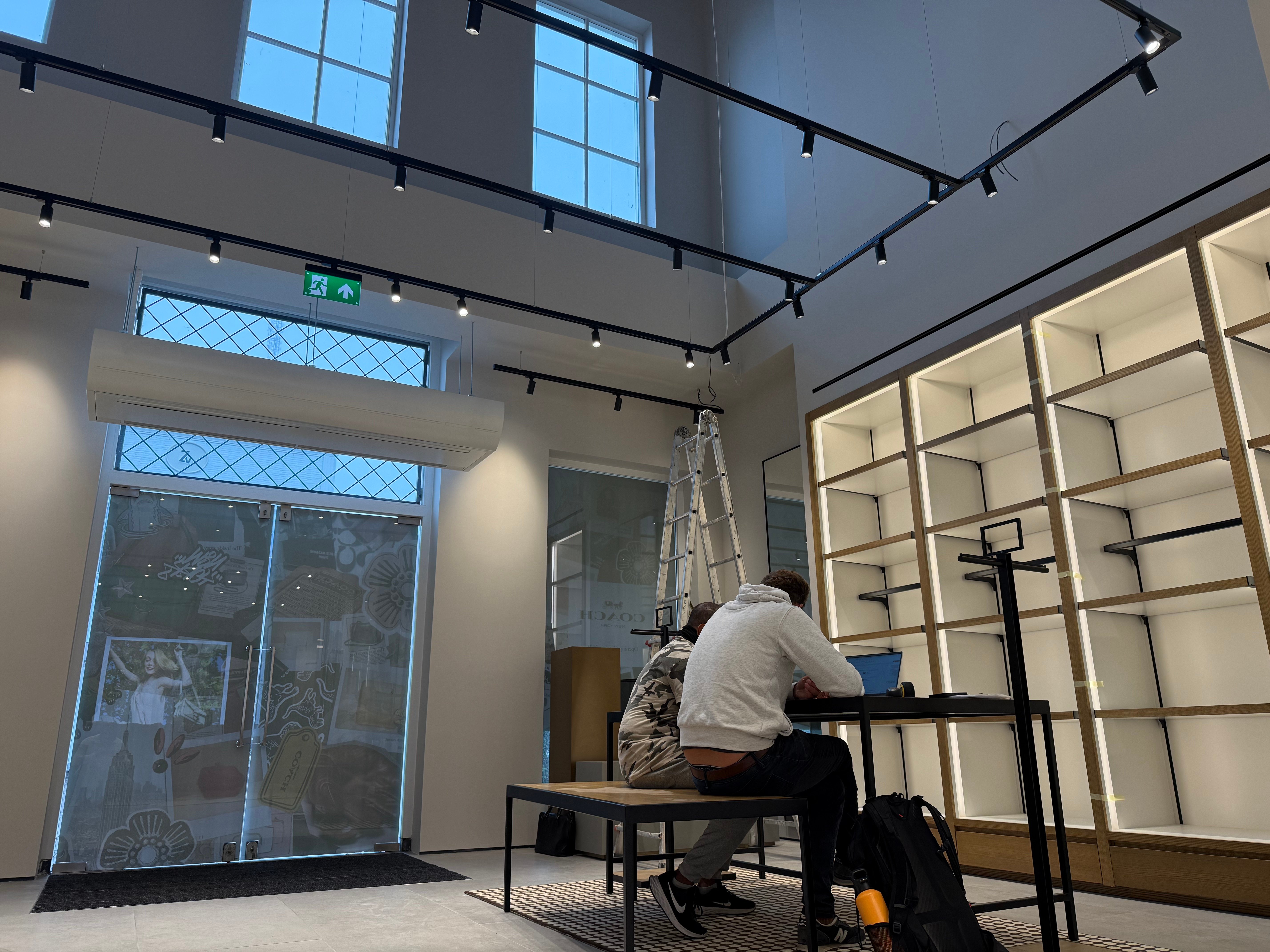
Store openings are often managed as construction projects.
Timelines are built, milestones are defined, and progress is tracked toward completion. It creates structure, accountability, and control.
And yet, when looking at delays—or even just suboptimal timing—it becomes clear that construction is rarely the sole driver.
Opening dates are shaped by a much broader ecosystem:
- property and lease agreements
- design and planning decisions
- procurement and supplier readiness
- global supply chain dynamics
- on-site execution
Each of these elements operates on its own timeline.
Each introduces dependencies.
And each has the potential to either protect—or erode—available salesweeks.
Which raises a more uncomfortable observation: store openings are not delayed by one function—they are defined by the interaction between all of them.
From Construction Timeline to Revenue Timeline
When viewed from this perspective, the idea of a single “construction timeline” starts to feel incomplete.
Because what ultimately matters is not when construction finishes, but when the store begins generating revenue—and how that moment aligns with the commercial calendar.
This is where the notion of a revenue timeline becomes relevant.
Not as a replacement for existing planning methods, but as a way to connect them to a shared outcome.
A revenue timeline asks different questions:
- What is the optimal opening window from a commercial perspective?
- Which dependencies across the chain influence that moment?
- Where is time being lost—not visibly, but structurally?
It shifts the focus from:
- Are we on schedule?
to:
- Are we protecting revenue potential across the entire process?
The Limits of a Traditional Critical Path
Most retail projects are managed using a critical path approach.
It is a proven method. It identifies the sequence of tasks that determines the overall duration of a project.
But it is also, by design, focused on a single dimension: task dependency within a project scope.
What it does not fully capture is how delays propagate across functions.
A delay in:
- supplier production
- international transport
- customs clearance
- site readiness
may not always sit on the traditional critical path—
but it can still determine whether a store opens on time.
This is where the idea of a commercial path starts to emerge.
Not as a formal replacement, but as an additional layer of understanding:
Which elements across the entire chain truly define the moment a store can start generating revenue?
This path rarely sits within one team.
It runs across the entire ecosystem.
The Real Opportunity: Removing “Invisible Waste” from the Timeline
When expansion programs are analyzed end-to-end, an interesting pattern often appears.
Delays are not always caused by major disruptions.
More often, they are the result of small inefficiencies accumulating across the chain:
- waiting time between handovers
- misalignment between planning and execution
- lack of synchronization between stakeholders
- late visibility into upstream issues
Individually, these moments are difficult to detect.
Collectively, they create “invisible waste” in the timeline.
And this is where the real opportunity lies.
Not necessarily in accelerating individual activities,
but in removing friction between them.
Because every week recovered from that friction is, effectively, a week added to revenue generation.
Why This Is an Orchestration Challenge
If timing is defined across multiple functions, then improving it cannot sit with one function alone.
Construction teams cannot solve it in isolation.
Supply chain teams cannot solve it in isolation.
Planning or property teams cannot solve it in isolation.
This is, fundamentally, an orchestration challenge.
It requires:
- alignment across functions
- shared visibility into dependencies
- a common understanding of what truly matters
Without that, each part of the organization may optimize locally—while the overall timeline remains suboptimal.
The question is not how to make one part of the process faster.
The question is how to make the entire process more synchronized.
From Execution Control to Chain Visibility
This is where the role of data becomes critical.
Not just more data—but better-connected data.
When organizations have visibility across:
- supplier progress
- logistics flows
- site readiness
- milestone dependencies
they gain the ability to:
- identify where time is being lost
- understand the impact of disruptions earlier
- coordinate responses across teams
Not by replacing existing systems, but by connecting them into a coherent view of the process.
This is what allows orchestration to move from concept to capability.
A Different Way to Look at OTIF
Within this context, metrics like OTIF take on a slightly different meaning.
Traditionally, OTIF measures whether deliveries arrive on time and in full.
It is a valuable operational KPI.
But on its own, it does not fully capture commercial impact.
When viewed through a revenue lens, the question becomes:
On time for what?
- On time for the construction schedule?
- Or on time to protect the store opening—and the revenue behind it?
This subtle shift reframes OTIF from an operational metric to part of a broader objective.
Not as the end goal, but as a contributor to maximizing salesweeks.
Closing Thought: Where Competitive Advantage Is Created
Retail expansion is often approached as a question of execution.
How to build faster.
How to deliver more efficiently.
How to stay within budget.
All of these remain important.
But as expansion programs scale, another dimension becomes more relevant:
How well is the entire process coordinated to protect revenue timing?
Because the difference between opening a store and opening it at the right moment is not always visible in project reports.
But it is highly visible in commercial performance.
And that difference is rarely created by one team, one decision, or one milestone.
It is created in the space between them.