Supply chain optimization has become one of the most important competitive advantages for modern businesses. Rising transportation costs, global sourcing complexity, labor shortages, geopolitical instability and increasing customer expectations are forcing companies to rethink how their supply chains operate.
Yet many organizations still approach supply chain optimization as a disconnected planning exercise instead of an operational execution strategy.
The result? Delays, fragmented communication, rising failure costs and reactive decision-making.
The companies creating the strongest operational advantage today are not simply optimizing transportation routes or warehouse utilization. They are orchestrating entire supply chain ecosystems across suppliers, logistics providers, construction teams, procurement, installation partners and project stakeholders.
This shift is redefining what supply chain optimization really means.
What Is Supply Chain Optimization?
Supply chain optimization is the process of improving the performance, efficiency and resilience of supply chain operations through better planning, coordination, technology and decision-making.
The goal is not only to reduce costs. Modern supply chain optimization focuses on balancing:
- Cost efficiency
- Speed
- Reliability
- Sustainability
- Visibility
- Risk reduction
- Resource utilization
- Service performance
Traditionally, companies focused on optimizing isolated functions such as transportation, warehousing or procurement. Today, organizations are increasingly realizing that true optimization requires end-to-end orchestration across the entire supply chain network.
This is especially critical in industries with high operational complexity such as retail construction, data center construction, manufacturing expansion and multi-site rollouts.
Why Supply Chain Optimization Matters More Than Ever
Global supply chains have become significantly more volatile over the past decade.
Companies are now dealing with:
- Geopolitical instability
- Tariffs and trade restrictions
- Longer lead times
- Supplier fragmentation
- Labor shortages
- Sustainability regulations
- Increasing customer expectations
- Rising construction and logistics costs
At the same time, many businesses still rely on fragmented spreadsheets, disconnected communication channels and siloed operational teams.
This creates enormous inefficiencies.
In complex project-driven supply chains, small disruptions often trigger chain reactions across transportation, installation schedules, supplier deliveries and project timelines.
The financial impact goes far beyond logistics costs alone.
Delays often lead to:
- Expediting costs
- Idle labor
- Rescheduling fees
- Revenue loss
- Delayed store openings
- Construction overruns
- Increased operational risk
The companies gaining competitive advantage are the ones creating predictability through orchestration and real-time collaboration.
The Hidden Costs of Poor Supply Chain Optimization
Many organizations underestimate the true cost of supply chain inefficiencies because the biggest losses are often hidden across multiple departments.
Poor supply chain optimization frequently results in:
- Duplicate transportation
- Inventory imbalances
- Installation delays
- Excessive expediting
- Supplier misalignment
- Construction downtime
- Manual administrative work
- Lost revenue opportunities
In large-scale construction and retail rollout environments, operational fragmentation becomes even more expensive.
One delayed shipment can impact:
- Contractors
- Site readiness
- Equipment rentals
- Installation crews
- Store opening schedules
- Revenue timelines
This is why leading organizations increasingly view supply chain optimization as a strategic business function rather than a logistics initiative.
Supply Chain Optimization Strategies That Actually Work
1. End-to-End Visibility
Visibility remains one of the foundational elements of supply chain optimization.
Organizations need real-time insight into:
- Supplier performance
- Shipment status
- Inventory positions
- Project milestones
- Installation readiness
- Budget deviations
- Risk indicators
However, visibility alone is no longer enough.
Modern leaders are moving beyond dashboards toward predictive orchestration and proactive issue management.
2. Network Consolidation
One of the fastest ways to improve supply chain efficiency is reducing fragmentation within the network.
This includes:
- Consolidating shipments
- Reducing unnecessary handovers
- Optimizing routing structures
- Improving cross-dock strategies
- Centralizing supplier coordination
In retail construction environments, consolidation can significantly reduce transportation costs, emissions and project complexity.
3. Supplier Collaboration
Many supply chain failures originate from disconnected supplier communication.
Leading organizations are investing in collaboration platforms that connect:
- Procurement
- Suppliers
- Carriers
- Construction teams
- Project managers
- Installation partners
Shared operational data improves alignment, accelerates decision-making and reduces execution risk.
4. AI-Driven Decision-Making
Artificial intelligence is rapidly transforming supply chain optimization.
AI is increasingly used for:
- Demand forecasting
- Risk prediction
- Route optimization
- Automated document processing
- Supplier analysis
- Exception management
- Capacity planning
The next evolution involves AI agents that actively coordinate workflows, escalate risks and automate repetitive operational tasks across the supply chain ecosystem.
End-to-End Supply Chain Optimization Explained
End-to-end supply chain optimization focuses on orchestrating every stage of the supply chain rather than optimizing individual silos independently.
This includes:
- Procurement
- Supplier management
- Transportation
- Warehousing
- Construction logistics
- Installation
- Inventory management
- Budget management
- Site coordination
The challenge is that many organizations still operate with disconnected systems and fragmented ownership structures.
As a result, optimization efforts often improve one function while creating inefficiencies elsewhere.
True end-to-end optimization requires:
- Shared data
- Shared accountability
- Shared workflows
- Real-time collaboration
- Integrated execution management
This is where orchestration becomes a major competitive advantage.
Supply Chain Optimization Technologies Transforming the Industry
Modern supply chain optimization technologies are evolving far beyond traditional ERP systems.
Today’s leading organizations increasingly use:
- Supply chain collaboration platforms
- Transportation management systems
- Real-time tracking solutions
- AI-driven analytics
- Emissions tracking tools
- Digital twins
- Predictive planning software
- Construction logistics platforms
The biggest shift is the movement from passive reporting toward active orchestration.
The most valuable technologies are no longer the ones that simply visualize data. They are the platforms that help organizations make faster operational decisions and execute actions in real time.
How AI Is Changing Supply Chain Optimization
AI is fundamentally changing how supply chains operate.
Historically, supply chain teams spent enormous amounts of time manually:
- Processing documents
- Coordinating stakeholders
- Updating spreadsheets
- Resolving exceptions
- Managing communication flows
AI increasingly automates these repetitive workflows.
For example, AI-driven document processing can automatically:
- Extract RFQ data
- Compare supplier quotes
- Generate purchase orders
- Identify missing information
- Escalate operational risks
This allows operational teams to focus more on strategic coordination and less on administrative workload.
Over time, AI agents will increasingly support real-time orchestration across complex supply chain ecosystems.
How to Optimize Your Supply Chain Network
Optimizing a supply chain network requires balancing efficiency, resilience and execution capability.
Key focus areas include:
- Supplier location strategy
- Transportation routing
- Inventory positioning
- Cross-dock utilization
- Construction sequencing
- Capacity planning
- Risk diversification
- Sustainability targets
The most successful organizations continuously optimize their networks based on changing market conditions, project requirements and operational performance data.
Supply chain optimization is no longer a one-time exercise. It is a continuous operational discipline.
Real Examples of Supply Chain Optimization in Retail Construction
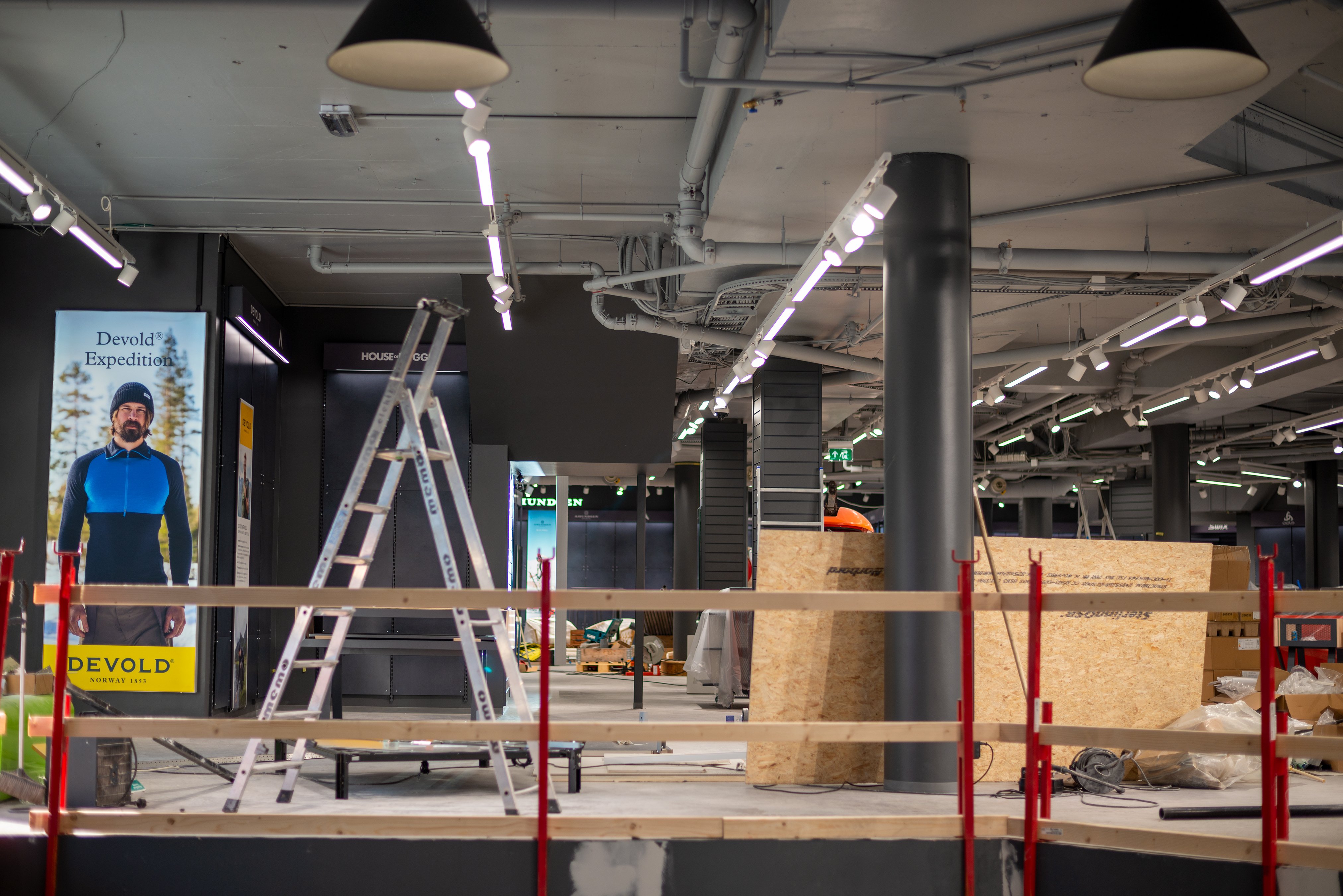
In retail construction and multi-site rollouts, supply chain optimization directly impacts revenue generation.
Delays in fixture deliveries, contractor coordination or installation sequencing can postpone store openings and reduce revenue weeks within a fiscal year.
Leading global brands increasingly optimize:
- Supplier selection
- Construction logistics
- Installation coordination
- Budget forecasting
- Transportation consolidation
- Project communication
This creates faster openings, lower failure costs and more predictable execution across global rollout programs.
The Future of Supply Chain Optimization
The future of supply chain optimization will be defined by orchestration, automation and predictive decision-making.
Organizations will increasingly shift from:
- Reactive management
to - Predictive execution
From:
- Isolated optimization
to - Ecosystem orchestration
From:
- Manual coordination
to - AI-supported operations
The companies that build integrated, collaborative and data-driven supply chain ecosystems will gain significant competitive advantages in speed, resilience and operational performance.