Rolling out stores or restaurants across international borders means operating in multiple regulatory environments, sourcing from unfamiliar supplier networks, and coordinating deliveries across time zones and customs regimes simultaneously. Each new market introduces a distinct set of international expansion risks that can delay openings, inflate budgets, and erode brand consistency if left unaddressed.
This guide breaks down the supply chain and compliance risks that define international store and restaurant rollouts. You will find concrete risk categories, mitigation strategies, and coordination frameworks designed for enterprise retail chains and hospitality project developers managing multi-market programs.
Understanding these risks before signing leases or committing purchase orders gives your team a structural advantage. Organizations that treat logistics as an afterthought consistently face the steepest cost overruns and the longest delays.
Key Takeaways: International Expansion Risks for Store Rollouts
- Supply chain fragmentation is the primary driver of delayed store and restaurant openings in new markets.
- Regulatory compliance varies drastically by country and requires market-specific legal and customs planning.
- Furniture, Fixtures, and Equipment (FF&E) procurement across borders demands coordinated lead time management.
- Caliber.global helps enterprise teams orchestrate multi-market rollouts with centralized supply chain visibility.
- Proactive risk mapping before market entry reduces cost overruns and protects your opening timeline.
Why International Store Rollouts Carry Higher Supply Chain Risk
Domestic rollout programs operate within a single regulatory framework, a familiar supplier base, and established logistics networks. International rollouts remove all three of those advantages at once. Your team now faces multiple customs regimes, unfamiliar freight corridors, and suppliers who may not share your quality standards or communication norms.
The core challenge is coordination. A single delayed fixture shipment held at customs in one market can cascade into missed contractor schedules, idle installation crews, and a postponed opening date. Multiply that scenario across ten or twenty parallel builds in different countries, and the operational exposure becomes significant.
According to a Harvard Business School working paper (2026), most international retail expansion failures are decided before market entry, not after. The strategic error is typically an absence of balanced adaptation across operations, supply chain, and compliance.
What Are the Main Categories of International Expansion Risk?
International expansion risks for store and restaurant rollouts fall into six interconnected categories. Each category affects the others, which is why treating them in isolation creates blind spots in your planning.
Supply Chain and Logistics Risk
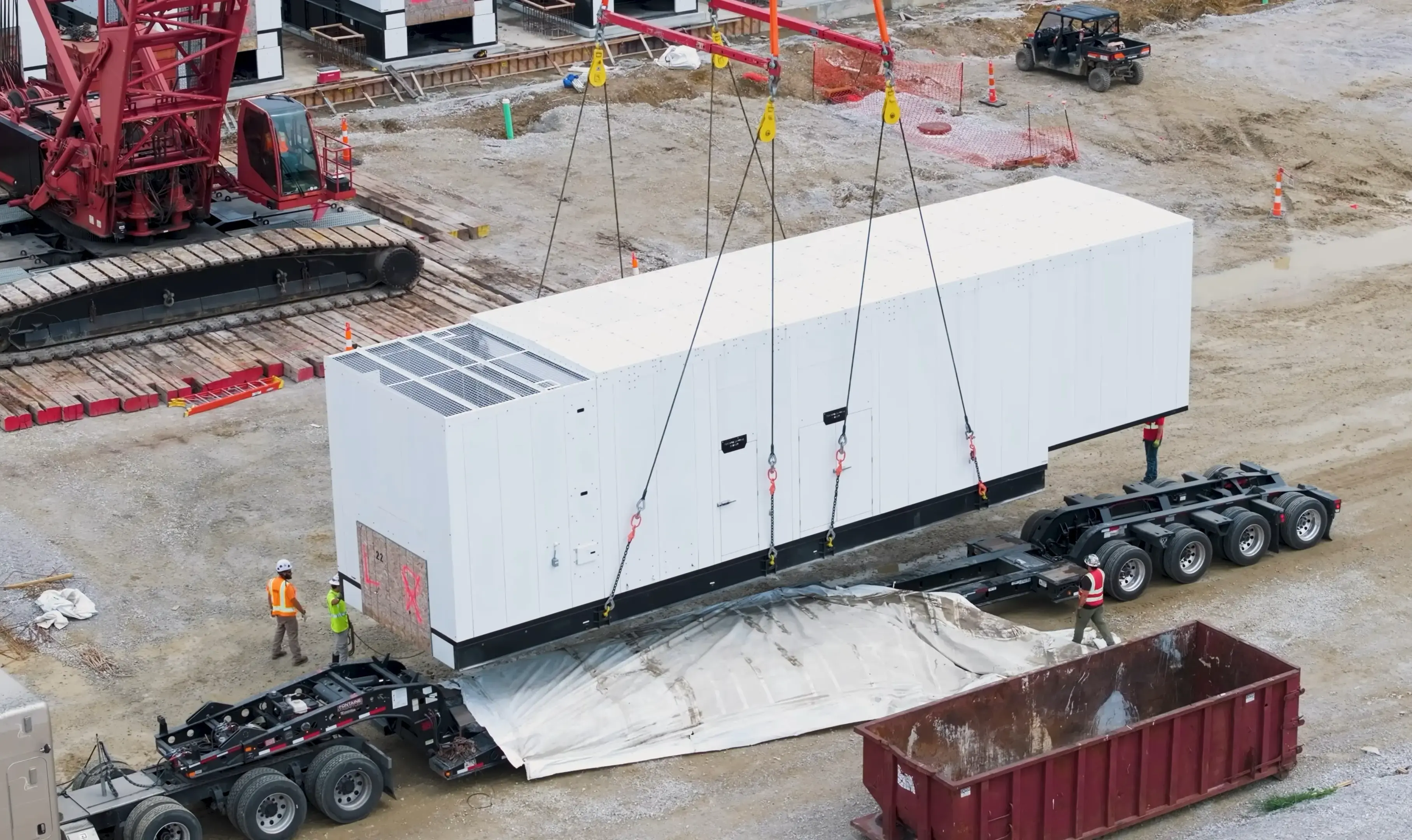
Moving materials, FF&E, and equipment across borders introduces freight complexity that domestic programs never encounter. You are dealing with ocean freight lead times, customs clearance windows, port congestion, and last-mile delivery in cities where your team has no established relationships.
Fragmented logistics providers in different countries often operate on incompatible systems. Without a centralized coordination layer, your project teams lose visibility into shipment status, purchase order changes, and delivery exceptions. That loss of visibility is where cascade delays begin.
Regulatory and Compliance Risk
Every country enforces its own building codes, fire safety regulations, electrical certification standards, and environmental requirements. A fixture package certified for installation in the United States may not meet EU CE marking requirements or local fire resistance classifications in Southeast Asia.
Non-compliance does not just result in fines. It blocks installation entirely, leaving contractors idle on-site while your team works to source compliant alternatives or obtain retroactive certifications. The cost of non-compliance is measured in project weeks, not just penalties.
Customs and Trade Compliance Risk
Customs clearance is one of the most underestimated risk areas in international rollouts. Incorrect Harmonized System (HS) codes, missing certificates of origin, or incomplete documentation can hold shipments at the border for days or weeks. In some markets, a single documentation error triggers a full inspection of the entire consignment.
Tariff structures, import duties, and value-added tax (VAT) obligations differ by country and by product category. Without upfront trade compliance planning, your project budget absorbs unexpected duties that were never accounted for in the original cost estimate.
Cultural and Market Adaptation Risk
Store design, material specifications, and even color palettes may need adaptation for local markets. Restaurants expanding internationally often discover that kitchen equipment standards, ingredient storage regulations, and dining area layouts differ substantially from their home market.
Underestimating these adaptations creates rework. A fixture package designed for a European format store may require modifications for an Asian market where store footprints, ceiling heights, and electrical configurations are different. Each modification introduces procurement lead time that your project schedule may not accommodate.
Financial and Currency Risk
International procurement exposes your budget to currency fluctuations between the point of purchase order and the point of payment. A 5% shift in exchange rates across a multi-million-dollar FF&E program can materially change your project economics.
Additionally, payment terms and banking infrastructure vary by market. Some suppliers in emerging markets require advance payment, while others operate on letter-of-credit structures that add administrative overhead and extend your cash conversion cycle.
Operational Coordination Risk
Running parallel builds across multiple countries means managing dozens of contractors, suppliers, and logistics providers who do not share a common operating system or communication platform. Without centralized dependency management, your project managers spend more time chasing status updates than solving problems.
Time zone differences compound the coordination challenge. A decision delayed by twelve hours in one region can cost a full working day on-site, pushing installation schedules and opening dates further out.
How Supply Chain Fragmentation Causes Delayed Store Openings
Supply chain fragmentation is the most common root cause of delayed international store openings. It occurs when procurement, logistics, and installation are managed by separate parties with no shared visibility into each other's status or dependencies.
Consider a concrete scenario: your procurement team places purchase orders for fixtures with three suppliers across two countries. Each supplier ships via a different freight forwarder, using different documentation standards. One shipment clears customs in three days, another takes twelve days due to a classification dispute. The installation contractor arrives on-site according to the original schedule, but only one-third of the materials are available.
The contractor either demobilizes, costing you a remobilization fee and schedule delay, or works out of sequence, increasing rework risk and quality defects. Both outcomes erode your budget and push the opening date.
Caliber.global addresses this fragmentation through its Supply Chain Collaboration Platform, Tract, which connects purchase orders, shipments, and site readiness into a single operational picture. When your team and your contractors operate from the same data, cascade delays lose their foothold.
How to Map Regulatory Compliance Risks Before Market Entry
Compliance risk mapping should begin months before your first purchase order in a new market. The goal is to build a market-specific compliance profile that covers every category of material and equipment your rollout requires.
Step 1: Identify All Applicable Standards and Certifications
Start with the building codes and construction standards that apply to your store or restaurant format in the target country. This includes structural codes, fire safety classifications, electrical standards, plumbing regulations, and accessibility requirements.
For FF&E specifically, check whether the target market requires CE marking, UL certification, or country-specific equivalents. Materials like upholstery fabrics may need to meet local flammability standards that differ from your home market.
Step 2: Audit Your Existing Specifications Against Local Requirements
Compare your standard specification package against the local requirements identified in Step 1. Flag every item that does not meet local standards and determine whether the gap can be closed through re-certification, material substitution, or supplier change.
This audit often reveals that 15% to 25% of a standard specification package requires some form of modification for a new market. Identifying those modifications early gives your procurement team time to source compliant alternatives without compressing the project schedule.
Step 3: Establish Local Compliance Partnerships
Engage local code consultants, customs brokers, and certification agencies before you need them urgently. Building these relationships in advance means your team has a direct line to local expertise when questions arise during procurement or installation.
Caliber.global maintains a network of vetted, independent customs brokers across markets, ensuring that documentation, duty calculations, and clearance processes are handled consistently regardless of the destination country.
Managing FF&E Procurement Risk Across Borders
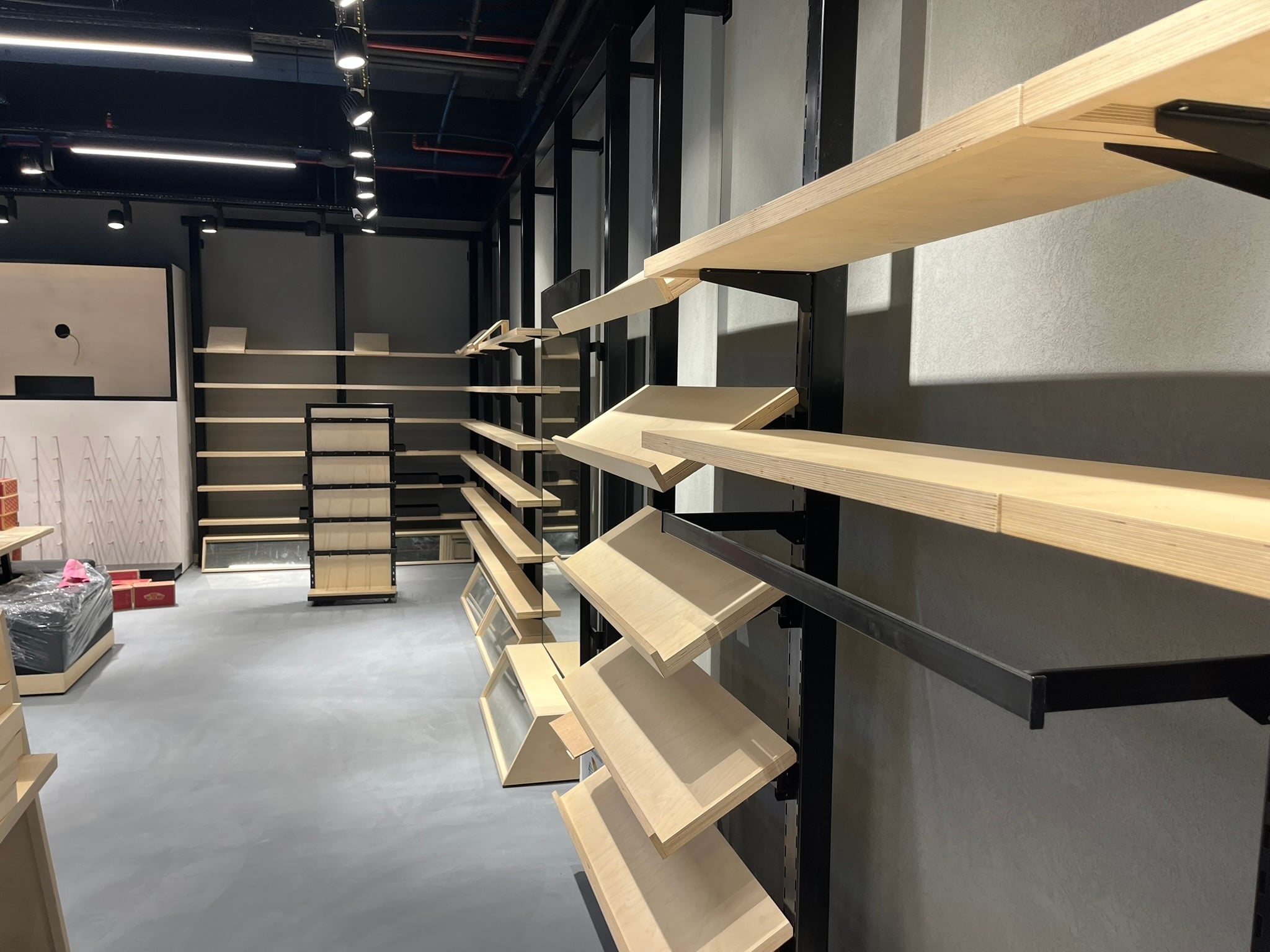
Furniture, Fixtures, and Equipment (FF&E) procurement is the supply chain category most exposed to international expansion risks. FF&E items are often custom-manufactured, oversized, fragile, and subject to strict quality and compliance requirements. Shipping them across borders adds layers of complexity that standard freight operations are not designed to handle.
Why FF&E Lead Times Expand in International Programs
Domestic FF&E procurement benefits from established supplier relationships, predictable lead times, and familiar logistics networks. International procurement introduces additional lead time at every stage: supplier qualification, sample approval, production, quality inspection, export documentation, ocean freight, customs clearance, and last-mile delivery to site.
A fixture that takes six weeks from order to delivery domestically may require twelve to sixteen weeks in an international program. If your project schedule does not account for this expanded timeline, you are building delay into your plan from the start.
How to Reduce FF&E Procurement Risk
The most effective risk reduction strategy is to front-load your procurement timeline. Place purchase orders as early as your design finalization allows, and build buffer time into your schedule for customs and logistics variability.
Centralized purchase order management gives your team real-time visibility into order status, production milestones, and shipment tracking across all suppliers and markets. This visibility enables early intervention when a supplier falls behind schedule, rather than discovering the delay when the shipment fails to arrive on-site.
Quality inspections at the factory level, before goods ship, prevent defective or non-compliant items from entering the freight pipeline. Catching a quality issue at origin costs a fraction of what it costs to resolve on-site in a foreign market.
Customs and Trade Compliance: A Step-by-Step Risk Reduction Framework
Customs and trade compliance deserves its own framework because it sits at the intersection of supply chain execution and regulatory risk. A single customs delay can hold an entire shipment of store fixtures at the border, blocking installation and pushing your opening date.
Step 1: Classify Every Item Before Shipping
Assign the correct Harmonized System (HS) code to every item in your shipment before it leaves the origin country. Incorrect classification is the most common cause of customs delays and can result in duties assessed at a higher rate than expected.
For complex FF&E shipments that contain dozens of different product types, classification requires expertise in both the product specifications and the customs regulations of the destination country.
Step 2: Prepare Documentation in Advance
Customs documentation requirements vary by country but typically include commercial invoices, packing lists, certificates of origin, bills of lading, and any product-specific certifications (such as CE marks or safety test reports). Preparing these documents in advance, rather than assembling them after the shipment is already in transit, reduces the risk of border holds.
Step 3: Engage Local Customs Brokers Early
Local customs brokers understand the specific requirements, informal practices, and potential friction points at their country's ports and border crossings. Engaging them during the planning phase, not after a shipment is already held, allows your team to anticipate and avoid common clearance issues.
Step 4: Build Duty and Tax Costs Into Your Budget
Import duties, VAT, and other government-imposed charges should be line items in your project budget from the start. Treating them as contingency costs or absorbing them into a general overhead category obscures the true cost of your international rollout and creates budget surprises.
Caliber.global's Global Trade Management service integrates duty and tax invoicing directly into the project cost structure, ensuring accurate cost allocation and simplified financial reporting across markets.
How to Build a Resilient Multi-Market Rollout Plan
A resilient rollout plan assumes that things will go wrong and builds the capacity to absorb disruptions without losing the overall program timeline. The difference between a fragile and a resilient plan is not optimism versus pessimism. It is the presence or absence of structured contingency at every critical dependency point.
Establish a Single Source of Truth for All Markets
When your rollout spans multiple countries, each with its own contractors, suppliers, and logistics providers, the risk of information silos grows exponentially. A single, centralized platform that tracks purchase orders, shipments, customs status, and site readiness across all markets eliminates the coordination overhead that siloed spreadsheets create.
Caliber.global's Tract platform serves exactly this function, connecting all supply chain stakeholders to a shared operational picture that updates in real time. When a shipment is delayed in one market, the project manager sees the impact immediately and can adjust the project schedule before the delay cascades into downstream activities.
Sequence Your Market Entries Strategically
Avoid launching in all target markets simultaneously unless your organization has the operational capacity to manage parallel builds at that scale. A phased approach lets you apply lessons from early market entries to later ones, refining your supplier base, compliance processes, and logistics coordination with each iteration.
Stagger your rollout so that the markets with the highest regulatory complexity or least familiar supply chain infrastructure come first, while your team still has bandwidth to resolve unexpected issues without jeopardizing other builds.
Build Schedule Buffer at Customs and Logistics Milestones
The milestones most vulnerable to international disruption are customs clearance, port handling, and last-mile delivery in unfamiliar cities. Build explicit buffer days into your schedule at each of these points. A three-day buffer at customs clearance costs nothing if the shipment clears on time, but it prevents a cascade delay if clearance takes longer than expected.
Pre-Qualify Suppliers and Logistics Partners Before You Need Them
Supplier qualification under time pressure leads to compromises. Pre-qualifying suppliers, freight forwarders, and installation contractors in your target markets during the planning phase gives your team vetted options when procurement begins.
Caliber.global's global partner network of over 1,200 suppliers and logistics providers has been built and validated through thousands of international construction and retail projects. This network reduces your supplier qualification lead time and connects your project to proven local execution capability.
What Role Does Technology Play in Managing International Rollout Risks?
Technology does not eliminate international expansion risks. It changes when you discover them and how quickly you can respond. The difference between a disruption that costs three days and one that costs three weeks often comes down to the speed at which the right people receive the right information.
Supply Chain Visibility Platforms
A supply chain visibility platform consolidates purchase order status, shipment tracking, customs clearance progress, and site readiness data into a single interface. For international rollout programs, this visibility is not a convenience. It is a prerequisite for effective dependency management.
Without centralized visibility, your project managers rely on email chains, spreadsheet trackers, and phone calls to piece together a picture of where materials are and when they will arrive. That manual process introduces latency, and latency in a multi-market rollout program translates directly into cost and schedule risk.
Exception-Based Management and Early Warning Systems
Monitoring every shipment and every purchase order across every market manually is not scalable. Exception-based management systems flag deviations from plan: a shipment that has not moved in 48 hours, a customs clearance that has exceeded its expected duration. These alerts route directly to the responsible project manager.
This approach allows your team to focus attention where it matters most, on the exceptions that threaten your schedule, rather than spending time confirming that everything on track is indeed on track.
Data-Driven Decision Making for Future Rollouts
Every international rollout generates data: lead times by market, customs clearance durations by port, supplier on-time performance by category. Capturing and analyzing this data creates a feedback loop that makes each subsequent rollout more predictable than the last.
Caliber.global's Data & Reporting capabilities connect and analyze supply chain data across projects, proactively identifying improvement opportunities that reduce risk and cost in future market entries.
Common Mistakes That Increase International Rollout Risk
Certain patterns appear repeatedly in international rollout programs that encounter significant delays or budget overruns. Recognizing these patterns in your own planning is the first step toward avoiding them.
Treating International Logistics as an Extension of Domestic Operations
The assumption that your domestic logistics model will work internationally, with minor adjustments, is the most common source of underestimated risk. International logistics introduces customs, tariffs, different carrier standards, and regulatory requirements that fundamentally change the operating model.
Your team needs a logistics strategy designed specifically for international operations, not a domestic strategy with international shipping bolted on.
Underestimating Customs Clearance Timelines
Project schedules that allocate two or three days for customs clearance in unfamiliar markets are optimistic at best. Clearance timelines depend on the accuracy of your documentation, the current congestion at the port, the classification complexity of your goods, and the responsiveness of the local customs authority.
Building realistic clearance timelines into your schedule, informed by actual data from prior shipments or local broker guidance, prevents one of the most common causes of opening-date slippage.
Failing to Centralize Supplier Coordination
When each market manages its own supplier relationships independently, you lose the ability to see cross-market dependencies and aggregate purchasing power. Centralizing supplier coordination under one point of control, whether internal or through a partner like Caliber.global, creates consistency in quality standards, delivery expectations, and sourcing processes.
Ignoring Local Delivery Constraints
Urban delivery windows, vehicle weight restrictions, noise ordinances, and site access limitations vary significantly by city and country. A delivery plan designed for a suburban U.S. location will not work in a city-center build in London, Tokyo, or Dubai.
Survey local delivery constraints during the planning phase and incorporate them into your construction logistics plan before materials begin shipping.
In Conclusion: How to Approach International Expansion Risks Strategically
International store and restaurant rollouts carry inherent risk. That risk does not go away with experience, but it becomes manageable when your organization treats supply chain coordination as a strategic discipline rather than an operational afterthought.
The companies that roll out stores successfully across multiple markets share a common approach: they map risks before market entry, centralize supply chain visibility, build schedule buffers at critical dependency points, and invest in local compliance expertise from day one.
Caliber.global partners with enterprise retail and food and beverage organizations to bring that level of coordination to every international build. When your supply chain operates as one orchestrated system instead of a collection of disconnected vendors, you open stores on time, on budget, and to the standard your brand requires.
FAQs About International Expansion Risks for Store Rollouts
What is the biggest supply chain risk in international store rollouts?
Supply chain fragmentation is the biggest risk. When procurement, logistics, and installation are managed by separate parties without shared visibility, delays in one area cascade into every downstream activity. Centralized coordination platforms, like Caliber.global's Tract, connect all stakeholders to a single operational picture, reducing this cascade effect.
How far in advance should you plan for customs clearance in a new market?
Start customs and trade compliance planning at least three to four months before your first shipment to a new market. This allows time to classify all items, prepare documentation, engage local customs brokers, and build duty costs into your project budget. Caliber.global's customs clearance service handles this process end-to-end, ensuring consistent compliance regardless of destination.
Why does FF&E procurement take longer for international rollouts?
International FF&E procurement adds lead time at every stage: supplier qualification, production, quality inspection, export documentation, ocean freight, customs clearance, and last-mile delivery. A fixture that takes six weeks domestically may require twelve to sixteen weeks internationally. Caliber.global's purchase order management gives your team real-time visibility across all stages.
How can you reduce the risk of regulatory non-compliance when expanding internationally?
Build a market-specific compliance profile that covers building codes, fire safety standards, electrical certifications, and product-specific requirements before placing any purchase orders. Audit your existing specifications against local standards and engage local code consultants early. This proactive approach prevents installation delays caused by non-compliant materials.
What is the difference between domestic and international rollout logistics?
International logistics introduces customs regimes, tariff structures, cross-border documentation, and carrier standards that do not exist in domestic programs. You need a logistics strategy designed specifically for international operations, including centralized visibility, local partner networks, and built-in schedule buffers at customs and port milestones.
How does centralized supply chain visibility reduce rollout risk?
Centralized visibility consolidates purchase order status, shipment tracking, customs clearance progress, and site readiness into one platform. Caliber.global's Tract platform provides this shared operational picture, enabling project managers to spot deviations early and adjust plans before small delays become large schedule disruptions.