.jpg?width=1600)
A delivery date tells a project team when equipment is expected to arrive. It does not tell them whether the site will be ready to receive it, whether the installation team is available, or whether the technical documentation has been approved.
That distinction matters in data center construction. Procurement, logistics and site execution each have their own schedules, but the project depends on how well those schedules connect.
Creating a more predictable supply chain therefore requires more than tracking orders. It requires clear information, repeatable processes and coordinated decisions across the entire delivery process.
What the research tells us
Rider Levett Bucknall’s Data Centre Trends Report 2026 draws on insights from 700 senior decision-makers at operators and construction contractors across the UK and Europe.
In its “Building stronger supply chains” chapter, 57% of respondents expect greater investment in AI forecasting and digital procurement to strengthen supply chains. Six in ten believe increased standardisation and modularisation will shorten delivery timelines and ease supply chain pressure by 2027.
These figures describe expectations, rather than proven performance improvements. They nevertheless show where industry leaders see opportunities to improve delivery.
RLB also identifies an important gap between ambition and adoption: only 31% of operators routinely use standard or modular designs. The report cautions that digital maturity may be overstated, with many organisations still relying on relatively simple supplier dashboards.
The practical question is how to turn those ambitions into better everyday project decisions.
Standardise the repeatable parts
Standardisation does not mean every data center must have an identical design. Local requirements, power availability and customer specifications can make that impractical.
A useful starting point is to identify which decisions genuinely need to vary between projects.
For example, a development programme could use consistent equipment specifications where appropriate, a common procurement approval process, and the same delivery-status definitions across sites.
This creates a repeatable foundation while preserving flexibility where it matters.
Consider two projects using the same equipment category. If each team describes specifications differently, suppliers must clarify requirements separately. If the requirements are consistent, both teams can start from the same approved information.
The benefit is fewer avoidable decisions and less time spent resolving differences that add no value.
Digital procurement needs information that people can act on
Moving a purchase order from email into a digital platform can improve accessibility. But a digital record alone does not establish whether the order supports the construction programme.
A useful procurement record should help the team answer practical questions:
- Which installation milestone depends on this equipment?
- What information is the supplier waiting for?
- Which dates are confirmed, and which remain estimates?
- Who must act if manufacturing or delivery changes?
- What needs to be ready before the equipment arrives?
For illustration, imagine a cooling unit scheduled for delivery on 12 June. A dashboard shows the order as “on track”, but the supplier is waiting for approval of a revised connection detail.
The delivery date becomes more useful when it is connected to that unresolved approval and to the person responsible for completing it.
Digitalisation should make dependencies easier to manage.
Connect delivery planning to site readiness
Equipment arriving early can create storage and handling requirements. Equipment arriving late can disrupt installation. An arrival that fits the transport schedule may still conflict with the construction sequence.
Project teams should therefore distinguish between equipment being available, dispatched, received and ready for installation.
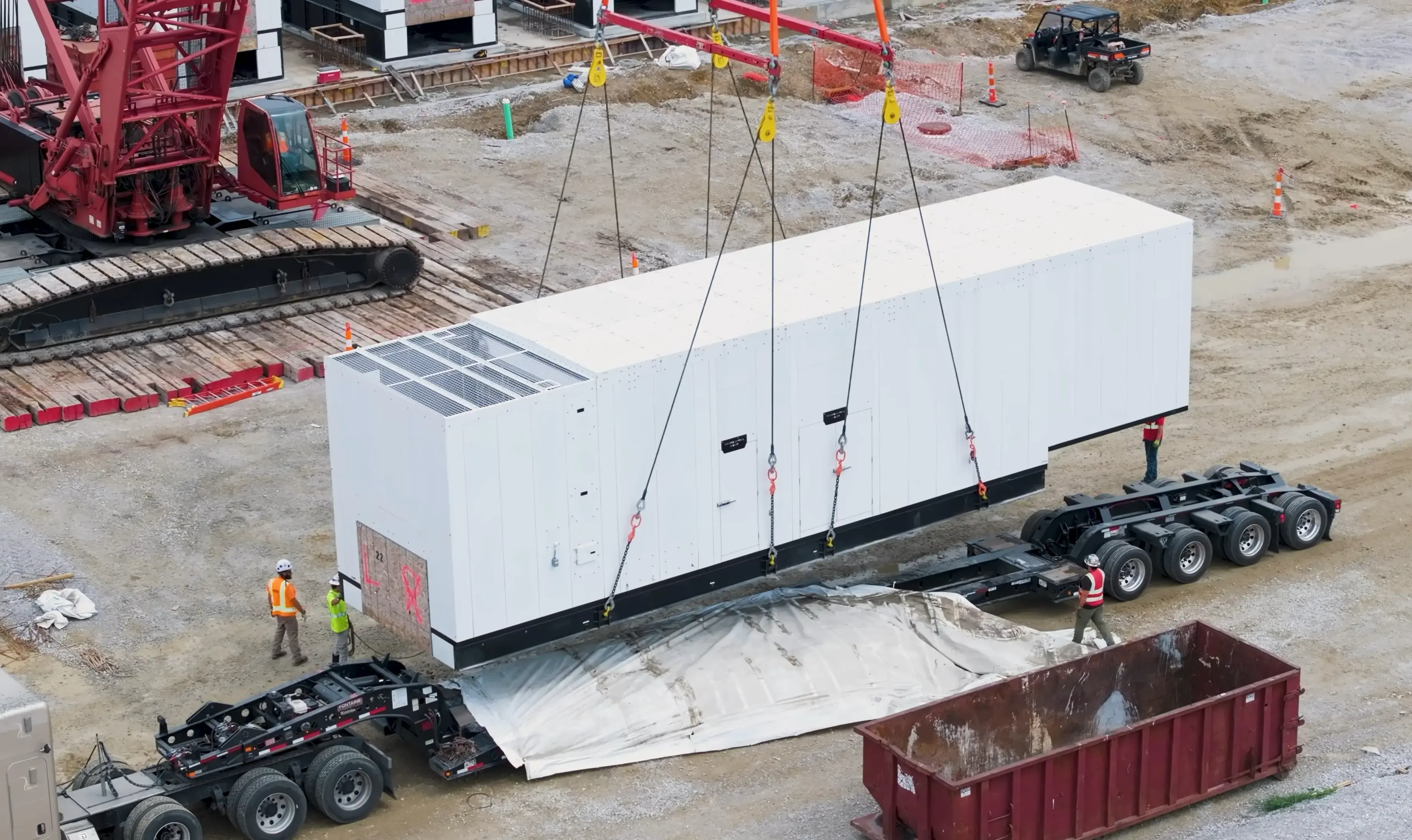
For a heavy equipment package, delivery planning might need to account for access restrictions, unloading arrangements, temporary storage and lifting availability. Each requirement needs an owner and a confirmed status.
This is particularly relevant when the owner purchases equipment directly while a contractor installs it. Procurement and installation responsibilities are split, so the handover between them deserves explicit attention.
Give AI a defined role
AI forecasting becomes useful when it supports a specific decision.
A project team might use it to flag an order whose latest supplier update conflicts with an installation milestone, or to identify missing information before a procurement deadline.
In either case, the underlying records must be reliable. The team also needs a clear process for reviewing the alert and deciding what to do.
A practical sequence is to define the decision, establish the required data, test the output and measure whether it helps people act earlier.
That creates a stronger basis for adoption than adding AI without an agreed operational purpose.
Build coordination into the operating model
RLB’s recommendations emphasise structured information requirements, digital supply chain visibility, early supplier engagement and framework agreements for long-lead equipment.
For project teams, applying those principles means agreeing how information moves between organisations and how changes trigger action.
Who updates the manufacturing status? Who assesses the impact of a revised delivery date? Who confirms site readiness? Who approves a change?
These questions should be answered before a disruption occurs.
For Caliber, this is the role of supply chain orchestration: connecting sourcing, logistics and site execution through shared information and coordinated workflows. TRACT supports that approach by bringing procurement, supplier updates and delivery information into a common environment.
More predictable delivery starts with a practical objective: give each stakeholder the information and responsibility needed to make the next decision.